German Embassy
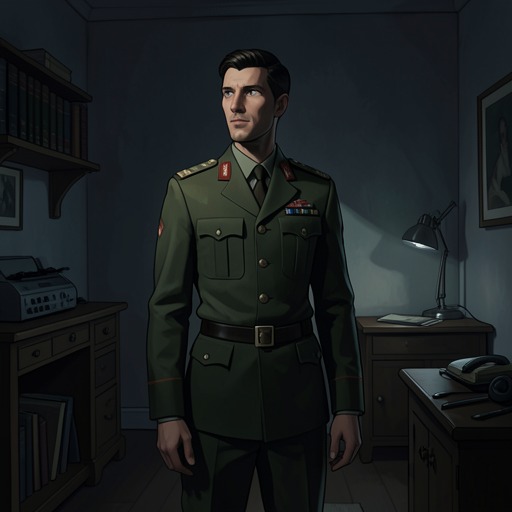
An Officer and a SpyThe German Embassy is a focal point of the intelligence work surrounding the Dreyfus affair: French agents watch its premises, photograph people entering and leaving, and recover papers discarded from its offices. The embassy is not merely a distant foreign institution in this account. Its waste becomes a covert channel into the French Statistical Section, while the surveillance mounted across the street reveals both the reach and the limits of military intelligence. The same files that make the embassy legible as a target also undermine the supposed certainty of the case against Alfred Dreyfus.
The Embassy as an Intelligence Target
The French service obtains documents from an agent working inside the German Embassy. The papers are supposed to be burned with the trash, but instead are passed to the Statistical Section. Many have been torn up, requiring Captain Lauth and Major Henry to reconstruct them. This flow of fragments gives the French service access to material from the embassy, but it does not make every recovered document evidence of a French officer's treason: the papers must still be interpreted, traced, and tested against other information.
The embassy's physical setting makes it a conspicuous yet difficult object of surveillance. It occupies the Hôtel de Beauharnais at number 78 Rue de Lille, behind a high wall and wooden doors opening onto a courtyard. Across the street, at number 101, Georges Picquart arranges an observation post in an apartment whose ground-floor tenant is already the embassy's officers' club. The arrangement lets his team observe the building without stationing conspicuous French officers at its entrance, and gives Picquart an operation independent of Major Henry.
The Agent and the Discarded Papers
The embassy cleaner is Marie Bastian, known within the service by the code name Auguste. She cleans the office of the German military attaché, Maximilian von Schwartzkoppen, and has supplied the French service for five years. Major Henry handles her and pays her two hundred francs a month. The intelligence product is itself given a code name, the usual route, language that makes the transfer sound like a routine channel rather than the risky passage of material from a foreign mission.
The physical form of the papers makes that channel visible. Schwartzkoppen tears communications into unusually small pieces, yet the fragments are repaired with narrow strips of transparent adhesive paper. The added layer leaves the documents stiff and strangely textured; letters in French, with romantic language, emerge from what first looks like waste. The method is painstaking rather than infallible: shredding complicates recovery but does not prevent it, while the reconstructed pages preserve intimate material alongside intelligence that may bear on military affairs.
The archive grows beyond a single set of scraps. During a clandestine search of the Statistical Section's filing cabinets, Picquart gathers material associated with Agent Auguste, including letters and telegrams connected to German and Italian military figures, cinders in a dated envelope, and numerous personal letters. The papers have yellowed and rustle as he sorts them. Their accumulation shows how the embassy channel feeds a much wider documentary collection, but also how intelligence files bring private correspondence and state information into the same system of custody.
Watching the Street
Picquart's Rue de Lille operation equips the apartment with photographic and optical equipment and a darkroom. Desvernine works there under a cover identity, while the embassy's club continues to operate immediately below. The surveillance is not effortless: the team attempts to hear through the floor and fireplace, but even when voices are close, the words remain indistinct. A listening position can establish proximity without delivering usable testimony.
The telescope and camera provide a different kind of access. Picquart watches Schwartzkoppen and the Italian military attaché Alessandro Panizzardi meet outside. Their embrace could pass in the street as a friendly social gesture; magnification makes their whispered exchanges visible, and Desvernine photographs them. The scene demonstrates both the power and the ambiguity of surveillance: the photograph records a meeting and the men leaning together, but what that meeting means still requires interpretation.
The operation also produces an image of Charles Ferdinand Walsin Esterhazy leaving the embassy gates. In a later photograph shown to Picquart, Esterhazy wears a grey bowler and has a half-smile; the detail Picquart is urged to notice is not simply his return to the embassy, but what he is carrying. The embassy therefore becomes a point in the investigation of Esterhazy as well as a source of the earlier material used against Dreyfus. Observation can connect a person to a place, but the significance of the connection depends on the object, document, or action recorded.
From Embassy Material to the Dreyfus File
A report preserved in the secret file records a warning passed through François Guénée, an agent of the French Sûreté, by the Spanish military attaché, the marquis de Val Carlos. The warning described a German agent on the General Staff, but did not identify him. Later, the bordereau became the basis of the case against Dreyfus. The chronology matters: a report about an unidentified officer and the discovery of the bordereau belong to the same intelligence history, but their proximity does not establish that Dreyfus was the officer in question.
When Picquart examines the secret file, its contents fail to supply direct proof that Dreyfus was a traitor. The papers rely on circumstance and insinuation, including the initial D in a reference to a lowlife. Picquart also finds problems with the chronology and the practical claim that Dreyfus could have removed and replaced large architectural plans. His doubts are sharpened by the broader archive: a letter offering military information under the name Dubois can be matched to a report identifying Jacques Dubois, a printer, as a possible source of plans. Picquart concludes that D refers to Dubois, not Dreyfus. The recovered embassy documents are thus part of an evidentiary world in which initials, copied plans, and reports can be misread or made to support an assumption they do not prove.
Surveillance, Secrecy, and Institutional Limits
The embassy material passes through several hands: Marie Bastian retrieves it, Major Henry handles her, Captain Lauth helps reconstruct the fragments, and the Statistical Section stores and classifies the results. Picquart later counts ten officials who know of the secret file, then adds seven judges, the president, the president's doctor, and Mathieu Dreyfus, reaching twenty before accounting for further disclosure. The arithmetic turns the idea of a sealed intelligence circle into a practical question of access and circulation. A secret is only as contained as the people, documents, and channels entrusted with it.
That vulnerability becomes politically consequential. After briefing Charles-Arthur Gonse on his investigation of Esterhazy, Picquart is told to investigate Esterhazy if he wishes but to leave the bordereau out of it. Gonse later acknowledges that the original Dreyfus investigation was not handled professionally, yet argues against reopening it because of the wounds and public hysteria it might revive. The embassy surveillance has produced more information, but additional information does not automatically produce institutional willingness to reconsider an established judgment.
The German Embassy therefore functions in the narrative as both a real intelligence target and a test of what intelligence can establish. Reassembled waste, photographs, and secret reports extend the French service's view across a diplomatic boundary, but they remain partial records requiring interpretation. The same machinery that promises hidden knowledge also exposes its weaknesses: fragments can mislead, surveillance can show contact without explaining it, and a classified file can conceal the absence of direct evidence as readily as it can preserve a genuine clue.